
What Is a Blast Freezer?
How It Works & Key Applications
A complete guide to blast freezer technology, operation principles, and commercial applications across food processing, seafood, pharmaceutical, and industrial operations
Get StartedWhen commercial food processors, seafood operations, pharmaceutical manufacturers, or industrial facilities need to freeze products rapidly while preserving quality, they turn to blast freezers - specialized refrigeration systems engineered to achieve what standard commercial freezers cannot: freezing speeds measured in hours rather than days, with product quality that meets the exacting standards of premium markets.
But what exactly is a blast freezer? How does it differ from the commercial freezers most businesses already use? And when does investing in blast freezing technology - whether through equipment purchase or rental - make financial and operational sense?
This guide explains the technology, operation principles, and real-world applications that make blast freezers essential equipment across industries where product quality, production throughput, and regulatory compliance intersect.
What Is a Blast Freezer?
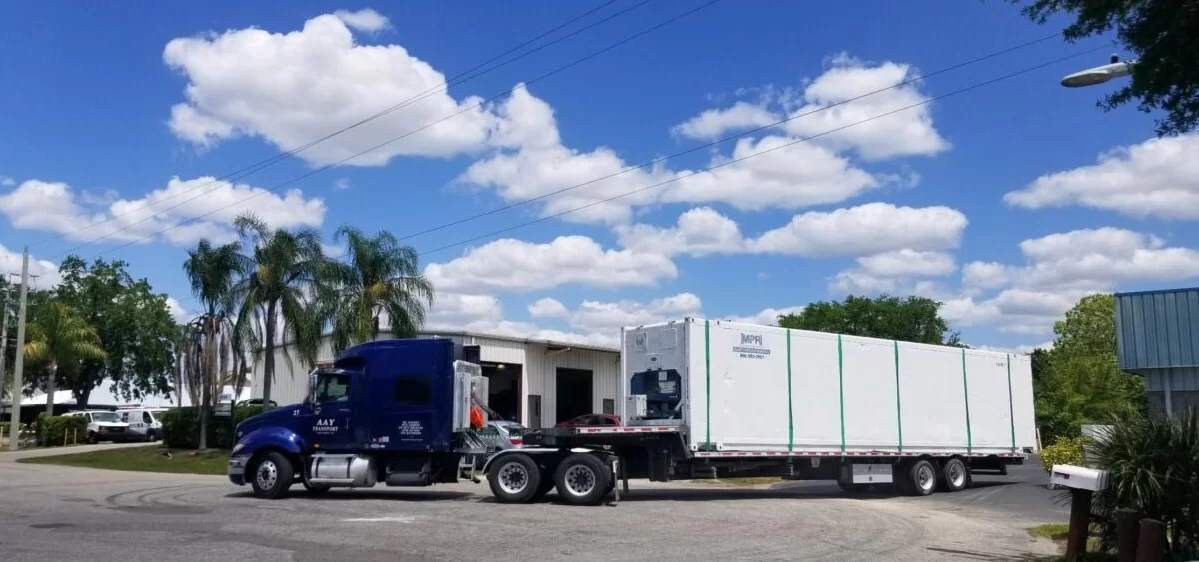
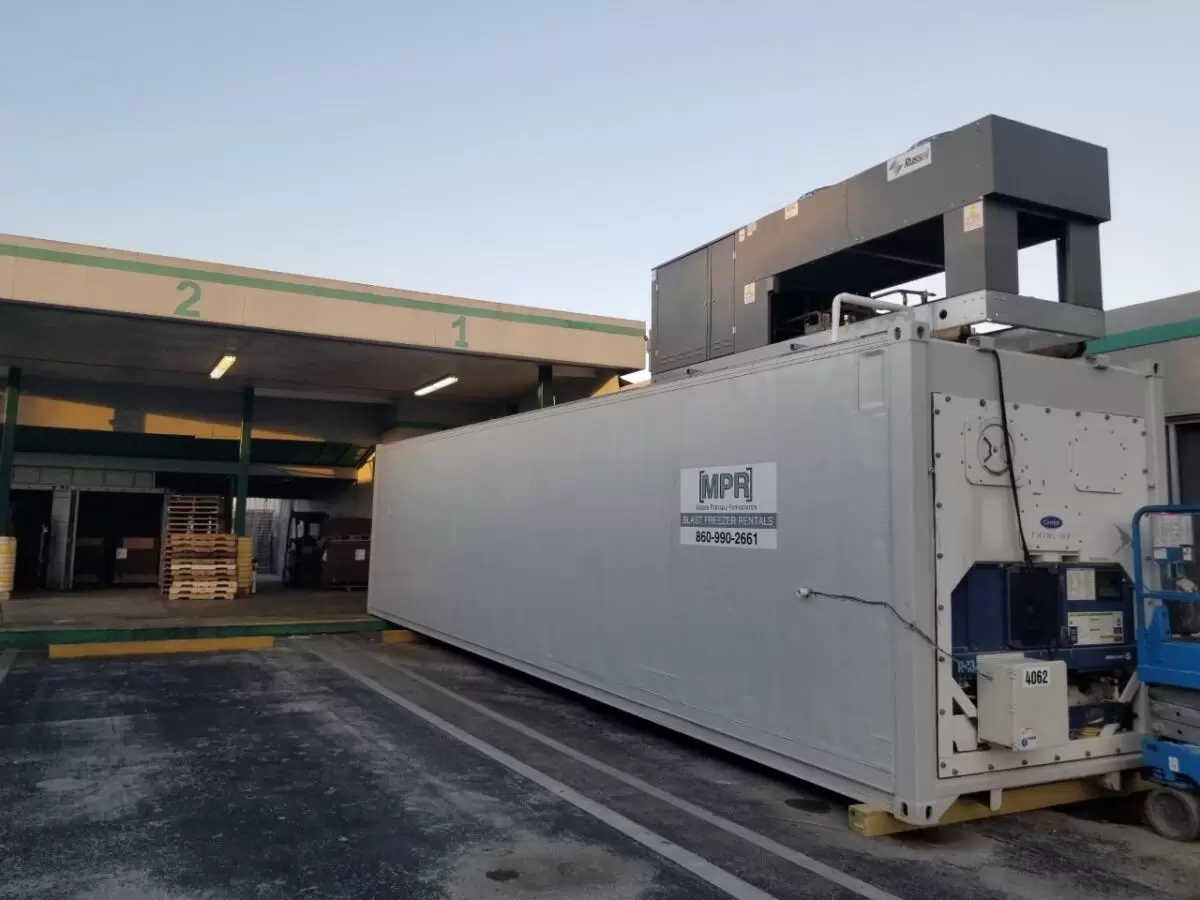
A blast freezer is an industrial refrigeration system designed to freeze products at exceptionally rapid rates by combining ultra-low temperatures with high-velocity forced airflow. Unlike standard commercial freezers that reduce product temperature gradually over 24-72 hours, blast freezers achieve target temperatures - typically -10°F to -40°F - within hours or even minutes depending on product characteristics and load size.
The term "blast" refers to the high-velocity air circulation that rapidly removes heat from products, preventing the formation of large ice crystals that damage cellular structure and compromise product quality. This rapid freezing preserves texture, moisture content, nutritional value, and appearance in ways that slower freezing methods cannot match.
Critical distinction: Blast freezers achieve cryogenic-speed freezing results without requiring liquid nitrogen, dry ice, or other cryogenic media - making them more cost-effective for continuous production operations while delivering the product quality that premium markets demand.
How Blast Freezers Work: The Three-System Architecture
Blast freezers achieve their superior performance through the integration of three interconnected systems working in precise coordination:
1. High-Capacity Refrigeration System
Industrial blast freezers operate at 100,000-200,000+ BTU capacity - significantly higher than standard commercial freezers. This extreme refrigeration capacity generates the ultra-low temperatures required to rapidly extract heat from large product loads.
The refrigeration system uses industrial-grade compressors, evaporator coils, and refrigerants specifically engineered for low-temperature applications. Modern systems typically use environmentally-responsible refrigerants while maintaining the temperature precision required for pharmaceutical, food safety, and quality assurance applications.
2. Forced-Air Circulation System
This is where blast freezers earn their name. Industrial fans generate high-velocity airflow - often 500-1000 CFM (cubic feet per minute) or higher - that continuously circulates freezing air across product surfaces. This forced convection dramatically accelerates heat transfer compared to the natural convection used in standard freezers.
Why airflow velocity matters: The faster heat moves away from product surfaces, the smaller the ice crystals that form during freezing. Small ice crystals preserve cellular structure, preventing the moisture loss, texture degradation, and appearance damage that occur when large ice crystals rupture cell walls.
3. Temperature Monitoring & Control System
Advanced monitoring systems continuously track chamber temperature, product temperature (via probes), and refrigeration system performance. Digital controls maintain precise temperature setpoints throughout the freezing cycle, ensuring consistent results across different product loads and external conditions.
For pharmaceutical and regulated applications, these systems provide validation documentation, temperature logs, and alarm capabilities that meet FDA, cGMP, and laboratory accreditation requirements.
The Science of Rapid Freezing: Why Speed Matters
Understanding why blast freezing produces superior results requires examining what happens at the cellular level during the freezing process.
The Critical Temperature Zone
All food products, biological samples, and pharmaceutical compounds pass through a critical temperature zone during freezing - typically 32°F to 23°F (0°C to -5°C) - where ice crystal formation occurs. The speed at which products pass through this zone determines ice crystal size, which directly impacts final product quality.
Slow freezing (standard freezers): Products spend hours in the critical zone. Large ice crystals form, rupturing cell walls and damaging tissue structure. Result: moisture loss ("drip loss"), texture degradation, nutrient damage, and compromised appearance.
Rapid freezing (blast freezers): Products pass through the critical zone in minutes. Tiny ice crystals form, preserving cellular structure. Result: minimal moisture loss, maintained texture, preserved nutrients, and premium appearance.
Bacterial Growth Prevention
Rapid temperature reduction also serves critical food safety and pharmaceutical stability functions. Bacteria multiply rapidly at temperatures between 40°F and 140°F - the "danger zone" for food products. Blast freezers minimize time in this temperature range, reducing bacterial growth and extending product shelf life.
For pharmaceutical applications, rapid freezing prevents degradation of temperature-sensitive compounds, preserves biological activity, and maintains the stability required for regulatory compliance.
Key Applications: Where Blast Freezers Are Essential
Blast freezers serve critical functions across industries where product quality, production efficiency, and regulatory compliance cannot be compromised:
Commercial Food Processing
Application: Freezing prepared meals, baked goods, vegetables, fruits, and processed meats immediately after production.
Why blast freezing: Preserves texture, prevents freezer burn, maintains nutritional content, and enables high-volume production. A food manufacturer producing 10,000+ meals daily cannot afford the production bottlenecks that slower freezing creates.
Typical capacity needs: 5,000-50,000 lbs daily, requiring blast freezers with 1,000+ lbs/hour throughput.
Seafood Processing & Distribution
Application: Freezing fresh-caught fish, shellfish, lobster, crab, and specialty seafood products for premium restaurant and retail markets.
Why blast freezing: Prevents protein degradation, preserves moisture content, maintains the premium appearance high-end buyers demand. A lobster processor selling to Michelin-starred restaurants cannot accept the texture damage slow freezing causes.
Real-world example: Commercial processor blast freezes 3,000 lbs of premium lobster in 3 hours versus 48+ hours with standard freezers, preserving tens of thousands of dollars in product value.
Meat Processing & Specialty Butchers
Application: Freezing custom cuts, preserving marbling quality in premium beef, processing game meats, and serving high-end restaurant accounts.
Why blast freezing: Prevents moisture loss ("drip loss") that affects both weight and eating quality. Preserves muscle fiber structure that slower freezing damages. Maintains the marbling appearance that premium buyers require.
Pharmaceutical & Healthcare
Application: Freezing biologics, vaccines, blood products, tissue samples, pharmaceutical compounds, and gel pack production for cold chain logistics.
Why blast freezing: Preserves biological activity, prevents compound degradation, meets FDA and cGMP temperature control requirements. Provides validation documentation and temperature logging required for regulatory compliance.
Bakery & Pastry Operations
Application: Freezing delicate pastries, specialty desserts, artisan breads, and decorated cakes for wholesale distribution or event catering.
Why blast freezing: Preserves delicate structures that collapse under slow freezing. Prevents moisture migration that causes sogginess. Maintains appearance and texture of decorated products.
Blast Freezer vs. Standard Commercial Freezer
Understanding when blast freezing becomes operationally necessary requires comparing performance across the factors that impact product quality and business profitability:
| Factor | Blast Freezer | Standard Freezer |
| Freezing Speed | Hours - rapid through critical zone | 24-72+ hours - slow reduction |
| Ice Crystal Size | Tiny crystals preserve cells | Large crystals damage cells |
| Product Quality | Preserved texture and moisture | Texture loss, moisture damage |
| Production Capacity | 1,000+ lbs/hr continuous | Limited by slow cycles |
| Ideal Applications | High-value products, commercial production | Storage, low-volume operations |
| Typical Cost | $150K-$300K+ purchase, rental options available | $5K-$50K depending on size |
The business decision: Standard freezers work for long-term storage of already-frozen products. Blast freezers become essential when product quality directly impacts revenue, when production throughput creates bottlenecks, or when customer specifications demand rapid freezing.
When Your Operation Needs a Blast Freezer
Blast freezer investment - whether through equipment purchase or rental - makes financial sense when one or more of these operational realities applies:
- Product quality directly impacts revenue - You serve premium markets where texture degradation, moisture loss, or appearance damage means lost sales or customer rejection
- Production volume creates bottlenecks - Standard freezer capacity cannot keep pace with production output, forcing expensive production slowdowns or outsourcing
- Customer specifications require rapid freezing - Buyers mandate blast freezing, temperature logging, or freezing speed documentation in purchase contracts
- Seasonal demand spikes occur - Peak season production requires temporary capacity that permanent equipment purchase cannot justify
- Outsourcing costs accumulate - Co-packer fees of $0.50-$2.00+ per pound mean in-house blast freezing pays for itself within months
- Regulatory compliance demands precise temperature control - FDA, cGMP, or laboratory accreditation standards require documented temperature validation
Blast Freezer Rental vs. Purchase: The Decision Framework
Industrial blast freezers capable of 1,000+ lbs/hour throughput typically cost $150,000-$300,000+ to purchase, install, and commission - with 6-12 month lead times and ongoing maintenance obligations.
Rental makes sense when:
- Immediate capacity is required (days not months)
- Seasonal demand doesn't justify permanent equipment
- Testing capacity needs before permanent investment
- Emergency backup for equipment failures
- Cash preservation for core business operations
Purchase makes sense when:
- Year-round high-volume production justifies capital investment
- Long-term capacity planning supports 3-5+ year equipment lifecycle
- Permanent facility infrastructure exists
Learn more about blast freezer rental options, capacity sizing, and ROI calculations in our Complete Guide to Portable Blast Freezer Rentals.
Partner with Blast Freezing Experts
Modern Portable Refrigeration has served food processors, seafood operations, pharmaceutical manufacturers, and industrial facilities across the USA and Canada for 35 years. Our ShockFreezer rental units deliver 200,000 BTU capacity, 1,000 lbs/hour freezing rates, and custom-build capabilities that match your specific operational requirements.
Contact Modern Portable Refrigeration for blast freezer rental solutions engineered for your production demands.
Featured Clients





Get Started Today!
Fill out this form to contact Modern Portable Refrigeration. You should hear back from a member of our team within 48 hours. We look forward to working with you.
